Under the heading “Occupying “canary” room. Nerve Cases are Soothed” the following article was published on 24 March 1919.
In the new Red Cross convalescent Docks, Sydney, NSW, the colour cure idea has been introduced by Miss Eadith Walker.
This is an experiment in such treatment in Australia, and R. R. de Mestre, a young Sydney artist, who has devoted special attention to the therapeutic value of colour, has carried out the scheme.
The ward, which contains three beds, at first glance has quite an uncanny effect. It is similar to one that has recently been equipped in the London Hospital, and is painted in colours which are supposed to suggest a day in spring.
The ceiling is of sky blue, the frieze being refreshed in a slightly lighter shade. The picture rail is of delicate green and acts as a gentle break to the peculiar shade of yellow which covers the walls, and is suggestive of sunlight.
The floor has a dark green covering and grass green mats. Aluminium grey is the shade of the beds, lockers and sconces, while the furniture and woodwork are of pale primrose. The lamp shades and bed spreads are also of primrose, while the curtains are of a soothing shade of deep violet.
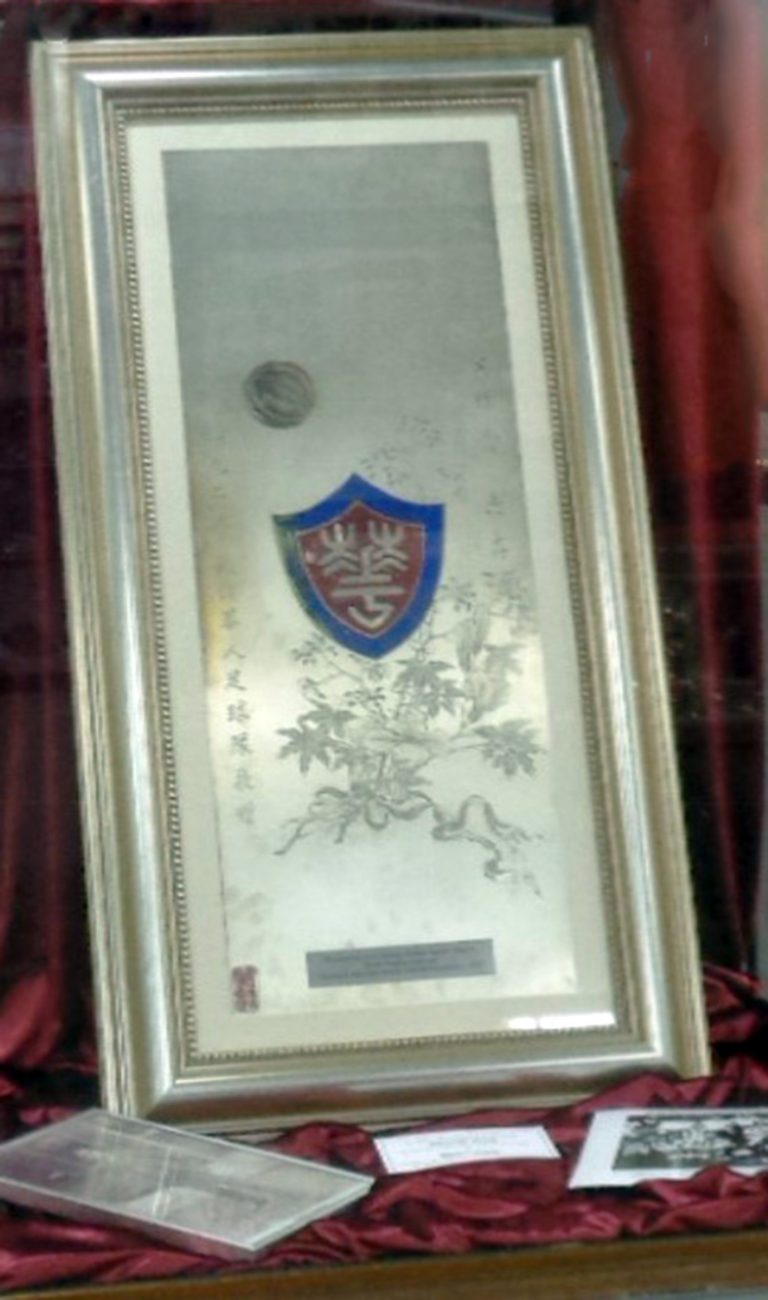
All those colours are reproduced in a decorative water colour landscape, painted by de Mestre especially to harmonise with the surroundings.
The patients at Russell Lea, who have already occupied the canary room, aver that they sleep better and the soothing and restful effects of the colour scheme have been commented upon by the few visitors who have been privileged to view it.
Roi de Mestre

In November 1916 de Mestre, a young Sydney artist, held his first exhibition, showing Impressionist paintings concerned with the effects of light.
In 1917 he met Dr Charles Gordon Moffit from the Kenmore Hospital at Goulburn, with whom he was to work devising a “colour treatment” for shell-shocked soldiers by putting them in rooms painted in soothing colour combinations.
De Maistre developed an interest in “colour-music”, his theory of colour harmonisation based on the relationship between colours of the spectrum and notes of the musical scale. With his ordered, analytical mind, he applied the theory of music to his painting.
In 1919 he held a joint exhibition titled Colour in Art to expound his theories. In this (at the time controversial) art exhibition the musician-turned-painter had chosen colours to harmonise like the notes in music. The exhibition showcased ‘colour orchestration’, an experiment on the interrelation between different hues on the colour spectrum and notes on the musical scale.
For example, the note A was matched with the colour red. The only existing example of this experiment is Rhythmic composition in yellow green minor (1919) which visualises music slowly unravel through the flow of colours. This “colour-music” exhibition became part of Australia’s art-folklore as “pictures you could whistle”.
This exhibition has since been identified as the earliest experiment in pure abstractionism in Australia. His colour charts, showing musical notes corresponding to different hues, are now owned by the Art Gallery of New South Wales, with “colour music” gaining a permanent place in Australian art history.
De Maistre was also interested in interior decoration and the manner in which the colours within a room could impact upon the human psyche. While exhibiting traditional pieces of fine art in the Colour in Art exhibition, he also included a ‘Colour Organisation in Interior Decoration’ segment. In this part of the exhibition, De Maistre displayed domestic interiors based on his ‘colour music’. Discs and scales to help home-owners integrate colour music into their own homes were made available for purchase. In 1924, this colour harmonising chart was further developed by Grace Brothers and placed for sale in their stores.