
(The following article was published in the Concord Recorder, dated Thursday, 3rd December, 1959)
The first guests in residence at Concord House are individually happy, and last Sunday, over a salad luncheon, they laughed and joked in recalling Concord as it was forty years ago.
Most of Concord was, then, vast paddocks. Streets were deeply rutted with cart tracks – those who could afford the luxury of a horse and buggy. A local dairy supplied Concord with milk.
Thomas Walker owned most of Concord. The present Concord Road runs through what was part of the Walker Estate. The Walker home was vast, and when the servants went on errands or visiting on their days off, they were taken to and from the station by buggy.
On Concord Road there are still some of the cottages which used to be occupied by persons employed by Thomas Walker. Eadith Walker is well remembered, as is her father’s will with its provisions setting out Eadith’s financial losses if she ever married.
Other memories flowed.
Where the 113 (AGH) hospital stands, local people were wont to gather baskets of mushrooms.
After the first World War came the difficult task of financing the building of the Solders’ Memorial Hall.
When the topic became concerned with fashions the guests laughingly told of their day when it was most fashionable to wear Fuji nighties with hand embroidered scalloped necklines. Every bed had a bolster! For very modern living there was the elite suburb of Glebe.
What had their people done to help Australia climb to nationhood? Well, one of the guests surprised with the information that her father was for 58 years Advertising Manager for the Sydney Morning Herald, whilst the husband of another guest had worked as a mason on the granite base of the Herald building, sizing blocks of granite weighting three tons.
Of the earliest churches, Miss Eadith Walker had financed the building of Holy Trinity, and the Sunday School, which was held in Mr. Arthur Morgan’s home until transferred to the first Sunday School at Holy Trinity.
None of the guests could recall any building in Concord with the distinction of having been built by convict labour.
Conversation turned to the guests’ attitude to Concord House. They declared, “It’s like home. We do our rooms. We clear the tables and wash up and wipe up after meals. But they all declared, “We don’t wash up the ‘Sunbeams’.” You know, the plates and cutlery on the table which aren’t used.
Laughing and joking and looking for “sunbeams” they forget the past to enjoy the present companionship and freedom unfolding for them in the newness of Concord House.
The expected first gentleman guest is rumoured to be a keen gardener. Everyone smiles. What will he grow? No one knows. There’s more smiles, verging on happy laughter. They know he’ll like Concord House. Before he even arrives he’s one of the gang of homely people.
 One feels quite certain that there’ll be thrust into his hand, not a spade for working or pumpkin seeds or bundles of plants, but that around washing up time he will be caught into the gang of wiper-uppers. There is mirth by the plateful when the wiping-up towels flourish at Concord House. (O. Aslett, Concord West )
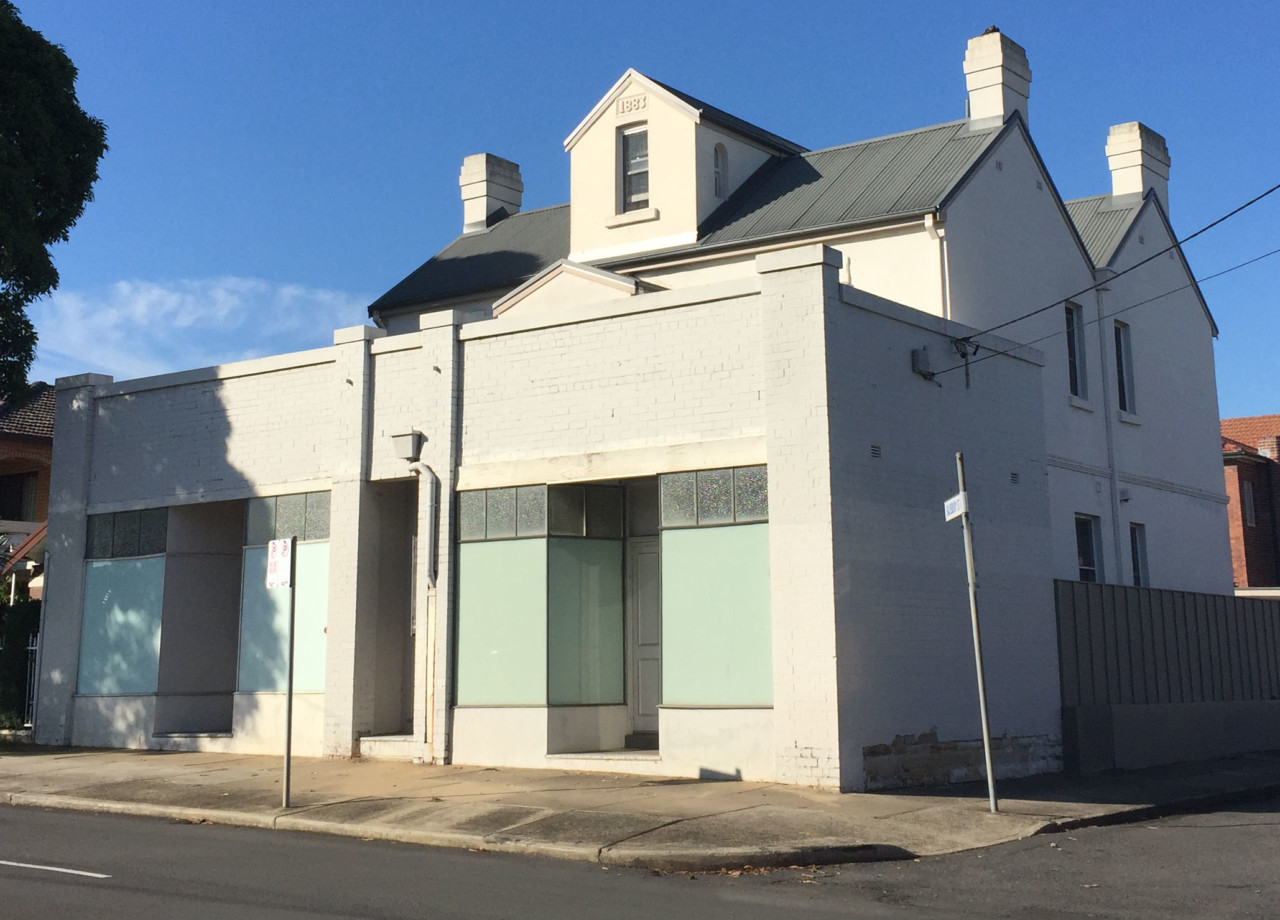
(Ed: In 1883 Concord House was built by Charles A. Wylie, who was a first pioneer of Concord district. Prior to erection of Concord House he lived in a small brick cottage fronting Parramatta Road, opposite the Bath Arms Hotel. Concord House (a two-storey building) is situated in Crane Street, between Burwood Road and Broughton Street, but is somewhat obscured by two shop fronts.)


