Colonel George Arthur, after 12 years a Lieutenant-Governor of Van Diemen’s Land, was appointed to a similar position in Upper Canada (now Ontario). His first task on arrival, in early 1838, was to clean up the remnants of a rebellion against the British rule which had been going on for some time in both Upper and Lower Canada (now Quebec).
Arthur did the job with typical thoroughness and efficiency. Some rebels were killed and others fled to the United States. Of those captured, 29 were executed and a few deported to Bermuda, which left 149 to be dealt with.

In view of Arthur’s long experience in charge of a convict colony, it is not surprising that he ordered them to be sent to Australia. Those from Upper Canada were to be sent to Van Diemen’s Land and those from Lower Canada, who were French speakers, to New South Wales.
The first ones from Upper Canada reached Hobart Town in July 1839, so debilitated by their voyage that three died soon afterwards. Four more arrived in January 1840 and 58 from Lower Canada came in February on the ship Buffalo.
All the Lower Canadians were men of good background and education and looked upon themselves as exiles. In fact they were regarded and treated as common convicts. In Van Diemen’s Land, particularly, they were so harshly treated that many tried to escape. Three took to sea in an open boat and were picked up by a passenger ship and eventually reached the United States. Others, no so fortunate, spent extra terms in Port Arthur for attempting escape.
Eventually most of the exiles in Van Diemen’s Land were pardoned, but many had to stay on until they could earn enough for the passages. By the time the last man reached Canada he had been away for 22 years.
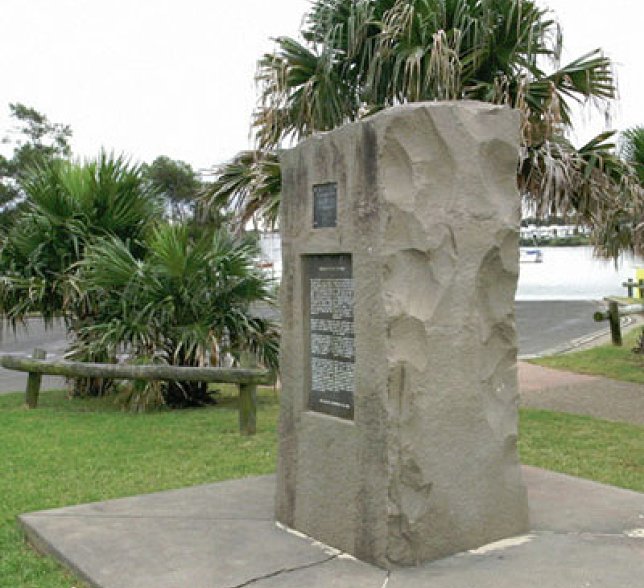
The French-Canadian group in Sydney was treated much better. Governor Gipps first intention had been to send them to Norfolk Island, but Bishop Polding, head of the Roman Catholic Church in Australia was able to prevent this. Instead they were sent to a stockade in what is now the Sydney suburb of Canada Bay. Most worked quarrying stone for a new road from Sydney to Parramatta. Then came a period when they were assigned to various government officials, and soon afterwards they all received ticket-of-leave.
Through the efforts of Bishop Polding and others, 29 received free pardons in 1844 and the rest at a later date. As in Van Diemen’s Land, many had trouble raising their fares home but eventually all but three returned to Canada. Of those that failed, two died in the colony and one, Joseph Marceau, married an Australian girl and elected to stay.
(Reprinted, with permission,
from the Heron Flyer, May 2016.)