

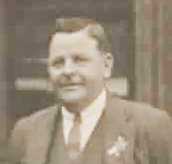
The now defunct horse trough on the corner of Park Road and Princes Street at Boronia Park has an interesting and intriguing history. It is one of about a dozen such watering troughs still to be found in the Sydney metropolitan area and was originally among 700 installed mainly across New South Wales and Victoria in the 1930s. The troughs were the result of a generous gesture from George Bills (see picture), a migrant from England who established a successful wire mattress manufacturing business in Sydney in the late 19th century.
George and his wife, Annis, who predeceased him, died childless. Following his death in 1927, a trust fund, amounting to around seventy to eighty thousand pounds, was set up to honour the terms of his will. In it, George, a life governor of the RSPCA, stated: “…construct and erect and pay for horse troughs wherever they may be of the opinion that such horse

troughs are desirable for the relief of horses and other dumb animals in Australasia, in the British Isles or in any other part of the world subject to the consent of the proper authorities being obtained”.
Most of the troughs, costing $13 plus transport and installation, were produced out of pre-cast concrete to a standard design. They each have a curved pediment with the inscription: “Donated by Annis & George Bills Australia”. How the Boronia Park trough came to be in its present location is a matter of conjecture. What is known is that municipalities able to provide foundations and a water supply wrote to the trust to apply for a trough. So it is likely that Hunters Hill Council was one of the successful applicants.
The trough is situated adjacent to Princes Street which was a thoroughfare down to a wharf on the Lane Cove River where logs, farm produce and tanned skins were shipped from local settlements. It is most probable that dray horses conveying materials to and from the wharf were halted at the trough for refreshment.
George’s practical concern with the welfare of horses is believed to have stemmed from the fate of thousands of the animals which were brought into military service by the Allied forces in the First World War. At the end of the war, Australia had 13,000 surplus horses overseas which could not be brought home for quarantine reasons.
At the beginning of the Second World War, horses were rapidly being replaced by motor cars, and the need for troughs diminished. Ironically, a modern notice stands immediately behind the historic Boronia Park water trough. It officially declares: “Horse Riding Prohibited.”
Chris Schofield: Published in “Bunk”, newsletter of the Hunters Hill Museum, April 2017




Hi – there is a Bills trough in St Ives. I think it is largely unnoticed and I’m thrilled to learn of its history. Are any of these troughs in Sydney locally heritage listed?
How can we find out how many of different types are still around in Sydney?
I am a descendant of the Bills family,(Mum was their great grand niece) and love seeing this history. I lived near the Anandale trough in early 90’s and my son ( now deceased ) lived in the house, closest to the Petersham trough in 2015, where he passed on. Love the site , thanks .