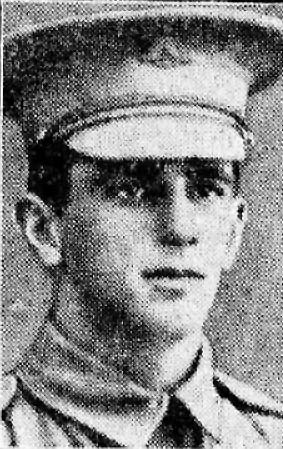
A short while ago our member, Trish Skehan, was fortunate in being able to access diaries of a young 21-year-old Jean Curlewis, as well as a series of letters which she had written to her mother, Ethel Turner, and brother Adrian. This is Jean’s story of her first three weeks as a Voluntary Aide (VA), sent to relieve overworked nurses at the Thomas Walker Hospital, which had been taken over by the government during the Spanish Flu epidemic in 1919 to care for some of the victims.
1919, April 8: Influenza broke through the quarantine barrier in February, and by the beginning of April things were so serious, and the shortage of nurses so great, that my family very sportingly allowed me to enlist.
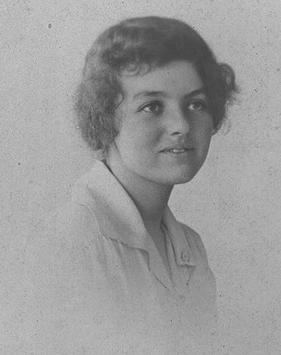
Mother and I went to the Red Cross Head Office where they enrolled me as a VA probationer for Walker Emergency Hospital on the Parramatta River. We were to actually nurse the patients but to be exempt from any responsibility. It was significant of the shortage, I think, that they took any girl as young and entirely untrained as I on first sight.
Mother and I then went out and bought me a thermometer for my very own, two white blouses, one dozen white handkerchiefs, horribly plain and solid (all mine being coloured, dainty and frivolous) and two large boxes of chocolates. I felt very happy.
April 9: Packed gaily all the morning – such a different process to the usual one, which normally included tennis shoes, evening frocks and riding habits. My dear friend Leo (Charlton) came for lunch and to take me up there on the ferry (I had rung him up the night before). He, himself, was rather worried – and a little jealous I think – that I should be a day ahead of him as he was to enlist the next day. Incidentally, I suspect he thought I didn’t know the duties of a probationer and was extremely doubtful of how I should get on.
We went down to Milsons Point where my brother, who was curiously impressed by my going, had cut school to say goodbye. He presented me with his wristlet watch for the duration.
Enjoyed the interesting glance that the man at the ticket window gave me when Leo bought my ticket for Walker Wharf and asked for the boat to stop at ‘that shunned and quarantined ground’.

On the ferry up to Walker Hospital we talked of how this Spanish Flu was affecting everyone, and what was the best way to put on rubber gloves. At Longnose we picked up another friend who is also enlisting tomorrow. He entertained us, gaily, with stories of nurses dying from Flu, etc.
Just as the hospital came into sight, Leo asked me if he could say goodbye properly, but I wouldn’t let him, for which I was to break my heart within three weeks. (She had not heard from him in weeks and thought that he had died of the Influenza. ‘No, that way madness lay.’)

We landed at the wharf with the lower bridge over it that would afterwards hold such terrible memories for me. (One patient, who peeked behind the Red Cross screens, saw what was ahead of him stuffed his pyjama pockets full of stones and stepped off the wharf.)
Feeling more than a little nervous, walked up the paved path to the huge building. A slim girl in white, with her mask thrown back, took me to the big hall with the polished floor and the glass door at the end, where I waited for a quarter of an hour until she took me into a sitting room and began to take down my particulars. It was then I discovered she wasn’t an Aide but the Matron. Felt slightly upset, but she was very kind.

She gave me a clean gown – a shapeless thing of unbleached calico from neck to ankle and to the wrist – an overhead mask and a toothbrush, then led me through the hall and along a corridor into a grassy quadrangle, with a fountain in it, into the cloisters round which were rows of beds surrounded by white screens with red crosses on them. Had a glimpse of the first flu patient I had seen – a flushed face and a tangle of black hair on a white pillow. Through another shiny hall, up a narrow staircase into the nurse’s quarters and into a five-bedded, bare floored room called Joanna – or irreverently Goanna – Walker. One narrow bed and two drawers of a yellow wooden dressing table belong to me.

I put on my gown and mask as artistically as possible – too artistically to be hygienic, as I left exposed a fraction of hair and caused an Aide who saw me to think that, though the new arrival made an ornament for the front hall, she would not have sense enough for the wards. Found my way down to afternoon tea in Matron’s dining room – protested that tea was an unnecessary luxury and was squashed with “Aides eat when they are told. You are expected to keep your strength up.”
A new orderly, Bernard Riley, a returned soldier and Med III was there, also Sister May, the housekeeper and dispenser, and a fair-skinned nurse Aarous, who seemed to me a wonderful person. She informed me that the hospital had been open eight days and they had had nine deaths – eight men and one woman.
I was then put on as Matron’s orderly to answer the telephone, mostly enquiries as to the conditions of patients, which I got from a list on the wall marked with code letters – D.I. (dangerously ill); N. W. (not so well); and C. (convalescent).
At first, it was hard to give bad news but it was curious how quietly the voices at the other end took even the worst reports – scarcely a further question, except once or twice “Is he conscious?”
(To be continued next month)