Ken Beames – Optical Engineer and Astronomer
In 2014 Canada Bay Council sponsored the “More Than Just a Name” project to mark the centenary of the outbreak of the First World War. The project memorialised the names of more than 1600 men and women who answered their country’s call to arms. Working with students from a number of local schools the group was able to provide at least a framework for further research, detailing such things as service numbers, units served in and where they were commemorated on honour boards or memorial plaques.
Inevitably, there were gaps in the database. Names that were impossible to decipher, identities that could not be determined from initials, aliases and omissions, all contributed to this.
One task that the Canada Bay Heritage Association has taken on is to fill in some of these gaps and where possible provide further information about those whose names are recorded on various memorials. Often this has been to add a postscript as to what happened after the (mostly) men returned. The additional notes personalise the names. They become real people and we are better able to relate to them.
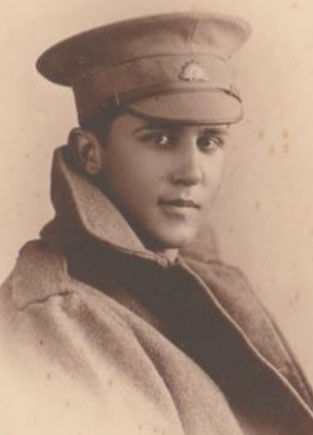
One name listed on the project’s database was Sapper Kenneth (Ken) Beames, (No. 21525). His service record gives little indication of the remarkable career that was to follow. Born in Binnaway on 16 August 1899, Beames enlisted in the A.I.F. on his 18th birthday. Being under 21 years, his mother, Alice, signed his permission to enlist.
Beames listed his occupation as postal assistant. Although not stated on his application, other sources show that he was a telegraph operator at Gilgandra Post Office. An anonymous annotation at the top of the page with the word “wireless” circled, indicated he also had some interest in this field and he was directed to undertake a course at the Wireless Training School and was subsequently assigned to the 1st Signals Squadron, attached to the ANZAC Mounted Division of the Australian Light Horse.
Beames returned to Australia in August 1919 and was discharged in September of that year.
After his return to Sydney Beams trained as an electrical fitter and machinist at Sydney Technical College. After completing his trades in 1924 he established his own manufacturing business, the K. Beames Radio Company, making radio receivers, gaskets and various items. In 1925 he married local girl, Dorothy Eulalie Nixon, and in 1932 the couple moved to 42 Clement Street, Five Dock.
During the 1930’s Beames developed an interest in astronomy and after making a number of smaller telescopes embarked on a more ambitious project to make a 61cm mirror from an imported glass blank using a homemade grinding machine. The primary mirror, telescope tube and mounting were completed in 1939.
During the Second World War, the K. Beames Engineering Company produced sighting telescopes and signalling lamp optics for the Royal Australian Navy.

In 1943 he joined the British Astronomical Society and began to look for a suitable place to build his own observatory. He finally settled on an area near Linden in the Blue Mountains where he constructed a 60m square brick building with a 37m iron dome and installed three large telescopes. He later also relocated his engineering company to Linden.
Beames was well known for his precision instrument making and acquired a reputation amongst astronomers for his ingenuity in the design and manufacture of telescopes. His work made a significant contribution to Australia’s military capability by mass producing lenses on machinery of his own construction. Beames produced rifle sites, periscopes and siting telescopes. He even made his own optical glass due to wartime shortages. During his lifetime Beames is estimated to have made at least 450 telescopes.
Beames died in Linden on 28 March 1989 – aged 89 years. He was buried Gilgandra Cemetery.
Andrew West