Visit our museum to meet our life-size replica.
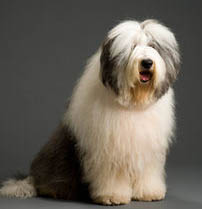
The Old English Sheepdog is the brand mascot for Dulux paint. The dog was first introduced in advertising campaigns in 1961. Since then they have been a constant and highly popular feature of Dulux television and print adverts wherever the paint is sold. So much so, that many people in those markets refer to the breed as a ‘Dulux dog’ rather than a Sheepdog.
Over the years, different dogs have appeared in the adverts. However, they all look very similar, due to the carefully managed selection process carried out by ICI’s advertising agency. The first Dulux dog was Shepton Daphnis Horsa, pet name Dash, who held the role for eight years, owned by Eva Sharp in Tottenham. His successor, Fernville Lord Digby, was the most famous Dulux dog and also made his owners, Cynthia & Norman Harrison, famous. When filming advertisements, Digby was treated like a star, being driven to the studio in a chauffeur driven car. Ba rbara Woodhouse was employed to train Digby and his three stunt doubles, who were used whenever specific tricks or actions needed to be filmed. Digby’s popularity led him to play the title role in the 1973 British comedy film Digby, the Biggest Dog in the World.
Gambit – another Dulux dog, was used in a photographic shoot in 1980 for Philips Video and its new generation of video recorders. By the time the shoot was finished there was enough hair to fill a mattress – the dog was constantly groomed during the shoot. King Hotspur of Amblegait was used from 1974 to 1979 and appeared in over 50 television programmes as well as his public appearances for ICI/Dulux.
Apart from Dash, all the Dulux dogs have been breed champions, and five of them have won ‘Best in Show’ prizes.
The Dulux dog was placed at No. 51 in Channel 4’s ‘100 Greatest TV Ads’.
https://en.wikipedia.org/wiki/Dulux
 An Old English Sheepdog, mascot for the Dulux brand since the 1960s